This website uses cookies to improve the functionality and performance of the website, to better understand how you use AAPA’s website and services, and to provide you with a customized experience. By continuing your use of this website, you consent to this use of cookies. See our Privacy Policy for more information.
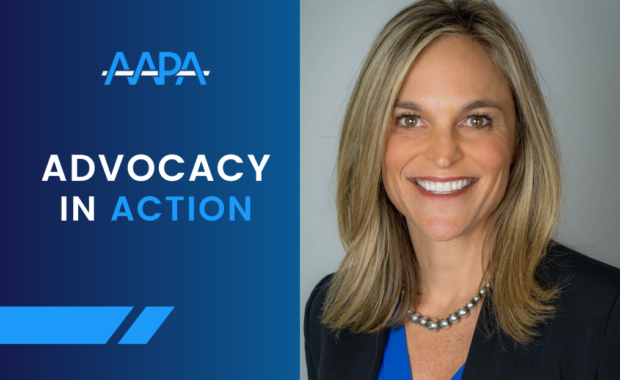
AAPA’s Vice President of Reimbursement and Professional Practice Sondra DePalma, DHSc, PA-C, DFAAPA, delivered compelling testimony before a subcommittee of the South Carolina Senate Medical Affairs Committee on the benefits, safety, and quality of physician associate (PA) care and the importance of removing supervision requirements for these healthcare practitioners in the state.
To close out the first half of the year, we're highlighting some of the Advocacy team's recent successes and engagements at the federal and state levels.
On July 1, North Carolina Gov. Josh Stein signed House Bill 67 into a law, a sweeping healthcare workforce reform bill that includes two key PA-related provisions that will improve patients’ abilities to access timely healthcare.
New Hampshire just became the third state to adopt “physician associate” as the official title for PAs, signaling growing nationwide recognition and momentum for title change.
AAPA and the Association of Physician Associates in Obstetrics and Gynecology (APAOG) recently joined the National Association of Nurse Practitioners in Women’s Health (NPWH) and the American College of Nurse-Midwives (ACNM) in an amicus brief in a case before the Supreme Court of the State of Alaska.
In a reminder to PA advocates in every state, the Oklahoma Academy of Physician Associates (OAPA) proved a familiar saying this week: It’s not over ‘til it’s over.
Iowa Governor Kim Reynolds signed HF 300 into law on May 27, making Iowa the 17th state to join the PA Licensure Compact. Leaders from the Iowa Physician Assistant Society (IPAS) attended the signing ceremony for the bill, which passed unanimously in both the Iowa House and the Senate.
The Advocacy Division is eager to connect with as many members, CO leaders, and delegates as we possibly can to exchange information that will shape our collective advocacy efforts for the remainder of 2025 and beyond.