This website uses cookies to improve the functionality and performance of the website, to better understand how you use AAPA’s website and services, and to provide you with a customized experience. By continuing your use of this website, you consent to this use of cookies. See our Privacy Policy for more information.
What’s at Stake: Fighting for PA Access to Student Loans
In Rural Kentucky, PA Dana Campbell Has Made a Difference – Loans Made Her Career Possible
February 13, 2026
By Dorsey Griffith
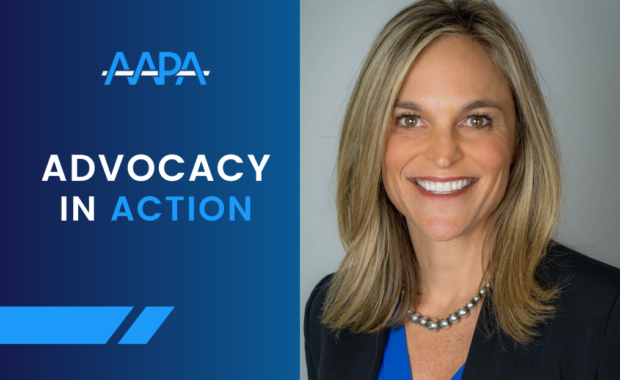
Dana Campbell, PHD, PA-C serves as department chair of the PA programs at the University of the Cumberlands and is the immediate past president of the Kentucky Academy of Physician Assistants.
Dana Campbell, PHD, PA-C, wasn’t a typical student very long. After high school, she joined the U.S. Navy, postponing the completion of a college degree until after she returned. When she decided she wanted to become a PA, she was already married with children, so she opted for a PA program close to home at the University of Kentucky – the only PA program available in Kentucky at the time.
Campbell relied on federal graduate school loans to cover tuition and essential living expenses during enrollment. In 2008, during the Great Recession, her household faced layoffs and other financial hardships, as many others did. While enrolled in PA school, she worked weekends as a surgical nursing assistant for as long as her academic demands allowed, helping to meet basic family needs such as food, diapers, and reliable transportation. Without access to federal and other student loan programs, she said, earning her degree would not have been possible.
Since graduating in 2010, Campbell has served the rural community as a PA, providing cardiovascular care to patients who travel from multiple rural Kentucky counties. As part of an experienced, patient-focused team of non-physician clinicians, she serves as a critical access point for cardiology care in a region that has long struggled to recruit and retain specialist physicians.
Kentucky has over 1,600 actively licensed PAs practicing in 92 counties, with nearly half of them working in areas facing documented shortages of primary care health professionals. Twenty percent serve in medically underserved areas. In her practice, she noted that PAs and nurse practitioners are essential for keeping the clinic doors open to patients, especially as supervising physicians experience high turnover.
Campbell returned to school to obtain her doctorate and is now the department chair of the PA programs at the University of the Cumberlands and is the immediate past president of the Kentucky Academy of Physician Assistants. Campbell worries that a proposed rule to limit loan amounts for PA students will scare applicants away, as the vast majority of Cumberlands PA students also rely on federal student loans to achieve their goal of becoming servant leaders in medicine.
Campbell accumulated significant federal student loan debt in her pursuit of the degrees essential to her employment. She fully met her financial obligations by making monthly payments and working for a non-profit health system to help meet the needs of underserved patients.
She believes that although the cost of PA school can be high, a PA career offers a good return on investment, as PAs are in high demand and fill an essential role in ensuring that patients in small communities and large can get the care they need.
“My students – the future healthcare professionals – are counting on Congress to protect their right to a graduate education so that they can meet the increasing healthcare needs of our communities,” Campbell said.
To learn more including how to join the fight to protect PA access to federal student loans, please go to AAPA’s federal student loans page.
An AAPA News Central Series Since the announcement of the Department of Education’s proposed cap on federal student loans, AAPA has received nearly 2,000 of stories from PAs, PA students, and pre-PAs describing how essential federal loans are to affording PA education and how the Department’s proposed rule would disrupt the PA workforce pipeline. This article is the first in a special AAPA News Central series, “What’s at Stake: Fighting for PA Access to Student Loans.”