Sponsored Content
Colorectal Cancer Screening: Evidence-Based Resources, from Risk Assessment to Screening Completion
October 21, 2026
“It turned out to be one of the most humbling and heartwarming experiences I’ve had as a clinician”
July 30, 2026
By Dave Andrews
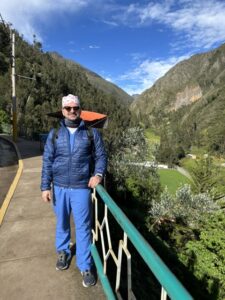
Stepping away temporarily from his full-time role at AAPA, Joe Ciavarro, DMSc, PA-C, traveled thousands of miles to a makeshift clinic high in the Peruvian Andes. There, surrounded by remote farming communities with limited access to healthcare, he was reminded of the profound difference clinicians can make, even with limited resources.
For more than a decade, Ciavarro practiced medicine in interventional radiology before transitioning into healthcare administration. For the past year, he has served as AAPA’s director of PA professional practice, focusing on advancing the profession through advocacy and leadership.
In March 2026, he briefly returned to delivering patient care as a volunteer on his first medical mission, an experience that reaffirmed for him the value of compassionate care.
“I’d never done a medical mission before, and I’ll admit, I had some initial apprehensions,” Ciavarro said. “But it turned out to be one of the most humbling and heartwarming experiences I’ve had as a clinician.”
All In from the Start
The opportunity came through Ciavarro’s close friend and mentor, Patti Cuartas, DMSc, PA-C, executive director and associate chief medical information officer at Mount Sinai Health System. Cuartas had participated in a similar mission to Nicaragua in 2025, which further solidified her passion for volunteering.
“[Nicaragua] was just such an incredible experience, so when the opportunity again presented itself to go to Peru, I said, ‘Absolutely!’” recalls Cuartas, who has more than 26 years of emergency medicine and other clinical experience. “And when I approached Joe about coming, there was no hesitation; he was all in from the very start.”
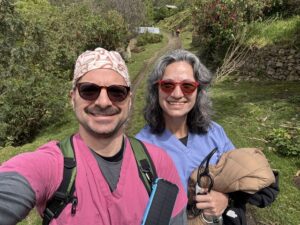
The trip to Peru was funded by FNE International and organized by the Stony Brook University PA Program, where Cuartas earned her PA degree and later served as an adjunct faculty member.
Cuartas and Ciavarro, along with 18 PA students from Stony Brook, spent five days providing primary care in remote villages surrounding Cusco, Peru. Each day, they transformed community spaces into temporary clinics — from a roof-covered, open-air soccer field on the first day to local health clinics and community buildings throughout the remainder of the trip.
The clinics served predominantly indigenous farming communities where reaching medical care often requires traveling several hours.
“For most of the patients we saw, getting to a medical appointment would normally require a three- to four-hour journey to Cusco,” Ciavarro said. “So, we knew they were incredibly grateful we were there.”
Each provider treated roughly 15 to 20 patients daily, addressing common illnesses while providing education on nutrition, injury prevention, and chronic disease management. Patients requiring specialty care received referrals, while FNE International coordinated follow-up appointments with local providers and transportation when needed.
Overcoming Language Barriers
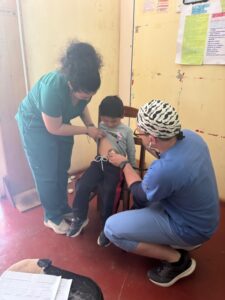
“Communication presented another unique challenge: Most patients spoke Quechua as their primary language and had limited Spanish proficiency. Community members helped the providers by translating the Quechua to Spanish, while Ciavarro worked with a Spanish-English interpreter.
Ciavarro described translating across three languages as “a fun challenge” that required patience and flexibility. He also found that many English words — particularly those that describe pain — have no direct Quechua equivalent, making careful communication essential.
“There were times that after something was translated to English, it seemed like a riddle to me and the students,” Ciavarro said. “We continually had to be creative to find different words that might translate better.”
As conversations unfolded through layers of translation, the providers began to recognize common themes among the patients. Many were seeking care for pain caused by decades of physically demanding farm work. Some were in their 70s and 80s and continued working long days in the fields, making chronic back, neck, and arm pain recurring complaints.
Others were living with injuries that had never been fully treated before they returned to work. One patient came to Ciavarro complaining of frequent shortness of breath without knowing the cause. After taking a detailed history, Ciavarro determined the symptoms likely stemmed from when the patient was gored by a bull nearly two decades earlier.
Finding Value in Volunteering
Before the trip, Ciavarro looked forward to serving patients in need, but he also wondered how much of a difference the team could make given their limited resources.
“I was worried it might be more of a disservice to these people — to go in and say, ‘Here, let me help you,’ but be extremely limited in what medications I could provide,” Ciavarro said. However, his perspective shifted almost immediately. “Seeing how excited and grateful they were that we were there, it was apparent they felt this was a huge benefit.”
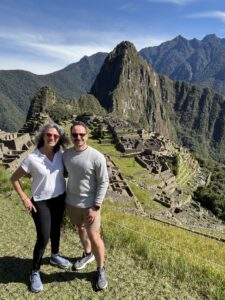
For many patients, simply learning that years of physical labor likely caused their chronic pain — not a more serious illness — provided reassurance. For others, confirming they needed specialty care gave them confidence that making the difficult journey to Cusco would be worthwhile.
“Sure, we can’t fix the systemic lack of resources in certain areas, but we can at least educate them about their options and discuss the benefits of proper nutrition and exercise — things that are within [the patients’] control that they might not know but are tremendously important,” he said.
Beyond the benefits to the patients, Cuartas believes the medical missions are equally meaningful for the PA students who participate.
“For me, one of the best parts is experiencing it with the PA students,” Cuartas said. “They get such incredible, practical experience that I wish I had as a student. And to be able to help facilitate that as a preceptor to these students is a huge added bonus.”
The Heart of the Mission
The provider team frequently worked without specialized equipment or everyday conveniences such as reliable electricity and warm running water. Working within those constraints reminded Ciavarro that meaningful care isn’t defined by the resources available, but by the relationships providers build with their patients.
Looking back, he says the mission reaffirmed that listening carefully, explaining diagnoses, offering reassurance, and helping patients understand their next steps can have a lasting impact — especially in communities where healthcare is difficult to access.
“The number of warm handshakes and tears of joy we got from them was very heartwarming,” he said. “I’m already looking forward to my next opportunity to go again.”
Cuartas shares that enthusiasm, saying the experience leaves a lasting impression on everyone involved.
“It’s hard to say no [to future medical mission opportunities] after seeing what we can do and what it means for these people,” Cuartas said. “I’m definitely going make the effort to go back, wherever the next destination may be.”
You May Also Like
On a Trek to Everest Base Camp in Nepal, PA Jill Nelson Visited Medical Facilities to Learn about Wilderness Medicine
PA Kirsten Brondstater Champions Inclusivity for the Deaf and Hard-of-Hearing Communities
PA Ashley Tolliver Brings Back the House Call with Redicare Mobile Health Service
Sponsored Content
October 21, 2026
You have 2 articles left this month. Create a free account to read more stories, or become a member for more access to exclusive benefits! Already have an account? Log in.