Sponsored Content
Colorectal Cancer Screening: Evidence-Based Resources, from Risk Assessment to Screening Completion
October 21, 2026
“There’s no one prescribed method, there’s no one reliable textbook—we’re looking at both proven methods and leading-edge ideas”
December 16, 2025
By Alex Morse
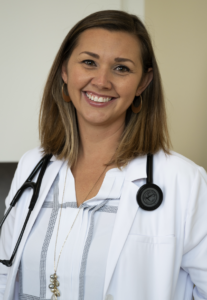
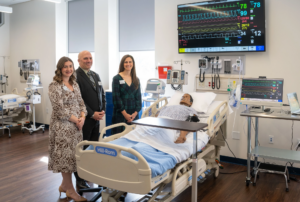
In January 2026, Mount St. Mary’s University in Emmitsburg, Maryland will welcome its inaugural class to a new physician associate program. Mary Jackson, DMSc, PA-C, CAQ-EM, program director and Mount alumna, will continue her work in emergency medicine while instructing the next generation of PAs.
The innovative new program will emphasize service within underserved and under-resourced communities, while offering core curriculum, coaching, and extracurriculars focused on building students’ well-being habits to help them persist in a meaningful career of service.
Creating a more inclusive healthcare system for all
Jackson and the team at Mount St. Mary’s University hope to familiarize students with underserved communities through exposure, providing students hands-on experiences in environments like Federally Qualified Health Centers and free clinics in rural areas.
For example, in their first semester, students will participate in a structured patient-case analysis where they dissect how factors like race, income, and language affect a patient’s care and clinical outcomes. In the second semester, students complete community-site immersion days and participate in outreach events to understand the lived realities of patients in underserved settings. And in the third semester, students learn how to advocate, leverage resources, and take action to champion healthcare equity in their communities.
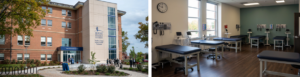
At the end of the program, prior to graduation, students will capstone their classroom and experiential learning to identify high-leverage plans to positively impact individual patient encounters and healthcare systems. To measure the program’s success, faculty will also track and evaluate graduates’ PANCE scores.
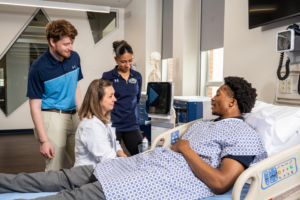
“Our goal is to impact actions and behaviors and beliefs,” Jackson said. “We really want our students to understand where we are in terms of healthcare equity, what is the imperative history that brought us here, and where do we go from here. How can we impact change on small and large scales.”
Through her work in emergency medicine, Jackson has experienced firsthand how bias can affect the care patients receive. Near her clinic is a family resource center that supports the local homeless population, and she noticed bias among her healthcare team when treating people from the center.
In response, Jackson and her colleagues decided to volunteer at the center to adjust their perspective. “We learned what they do there, we met the great people there, and we built a lifetime loving relationship of support and community,” she said.
That’s exactly what the new program hopes to impart on its students. “Part of the hope is that in having exposure and seeing the need, we will help to cultivate a pipeline of healthcare professionals that have a desire to meet that need and really think carefully and be advocates for healthcare equity,” said Christine McCauslin, dean of the School of Health Professions.

Mount Saint Mary’s has also launched the Care for America initiative—a program designed to create pathways for recent PA graduates to work in hospitals and clinics that treat underserved communities. Care for America provides full-tuition scholarships to PA students who demonstrate a track record of excellence, service, and desire to advance equity in healthcare. Scholarship recipients commit to practicing for at least two years in facilities in underserved areas.
Dedicated to sustaining long-term professional resilience
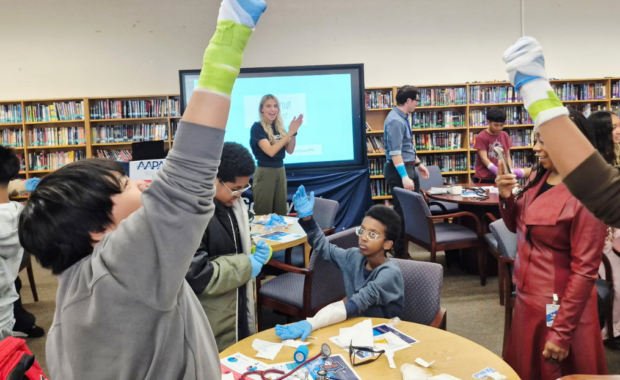
Along with igniting students’ interest in health equity, Mount St. Mary’s also hopes to give them a head start on curbing burnout. To accomplish this, the university developed a Center for Clinician Well-Being, which aims to help future PAs build lifelong habits that lead to contentment, resilience, and wellness.
The curriculum and coaching model are informed by many other promising practices, like the Mayo Clinic Strategies to Reduce Burnout and Duke Health & Well-Being Coaching Training program. The program teaches students practices supporting sleep, mental health, nutrition, exercise, mindfulness, and more. The goal is for each student to identify habits and practices that resonate with them and that they can continue to build over time.
“We’re really exposing our students to the breadth of these different things, the science behind them, the science of habit formation, and giving them a space to think about, ‘What do you want to do to prioritize your wellbeing? And what does it look like to continue to do that when things get really hard as practicing clinicians?’” said Jake Weinfeld, a certified health and well-being coach, and adjunct faculty member with Mount St. Mary’s who has helped to plan and develop the Center for Clinician Well-Being.
Jackson, who used to hire PAs in a large emergency department (ED) setting, said that it always broke her heart when she found a clinician meant for the ED, but who burned out after only a few years. This, she said, inspired her to figure out how to help PAs flourish long term.
“There’s no one prescribed method, there’s no one reliable textbook—we’re looking at both proven methods and leading-edge ideas,” Jackson said. “We’re helping the students along their own personal journeys because it will look unique for each one of them, and we support that.”
You May Also Like
PA and Assistant Professor Ivy Spadone Has Dedicated 25 Years to Caring for the HIV-Positive Patient Population in Nevada
PA John Byrnes Uses His Skills as a PA to Provide Critical Resources, Care, and Training Internationally
Coaching From the Outside In, PA Annie Wildermuth Helps Others Unlock Career Potential
Sponsored Content
October 21, 2026
You have 2 articles left this month. Create a free account to read more stories, or become a member for more access to exclusive benefits! Already have an account? Log in.