
Spadone employs humanistic medicine in patient interactions and teaches her students about the value of compassionate care
November 17, 2025
By Jennifer Walker

In 2000, Ivy Spadone, DMSc, PA-C, AAHIVS, saw a job listing for an HIV care provider to work with prisoners in the Nevada correctional system. The position was with Northern Nevada HOPES (HOPES), an organization founded to provide care to HIV-positive patients in the region. It seemed like an ideal fit for Spadone, who has an undergraduate degree in microbiology and an interest in immunology, viruses, and bacteria. She accepted the one-day-a-week position, and then spent 12 years providing care to HIV-positive patients in the prison system. In 2007, she also started seeing patients at the HOPES clinic in Reno—a role she chose to continue for six hours a week after transitioning to a career in academia in 2022. “I couldn’t leave my patients,” she said. “I think clinical care is in my DNA.”
Over two decades working with this population, Spadone has seen how advances in medications and research have changed the way HIV is managed. She also notices less stigma associated with the disease, particularly in relation to the LGBTQ community. However, there is still a need for education around HIV. The State of Nevada, which had 573 reported and newly-diagnosed HIV cases in 2023, has an HIV incidence rate of 21.1 cases per 100,000 people—the 8th highest incidence rate among U.S. states. There also continues to be stigma directed toward patients who contract the disease through injection drug use, and there is a need for support in finding solutions to social determinants that can affect health.
Spadone provides this education, both as a volunteer faculty member with the Pacific AIDS Education Training Center (Pacific AETC) and as an assistant professor in the PA Program at the University of Nevada School of Medicine. With her students, she also focuses on teaching the value of humanistic medicine, or treating others like humans regardless of their situations.
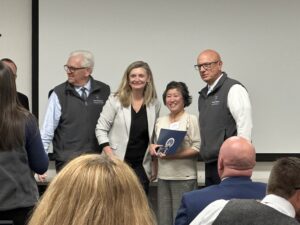
“Prison care really taught me that regardless of who you provide care to, they’re all just human beings—but human beings who have been dealt a whole different set of circumstances,” she said. “I try to teach this to my PA students. And hopefully, they’ll take that forth in their future careers.”
Finding a Specialty in Nevada
Spadone grew up in Malaysia where her options for higher education were limited. “As a Chinese person who was not ethnically Malay and who didn’t excel in academics, I couldn’t get a spot in a four-year university,” she said. It was important to Spadone to get a college degree, so she convinced her parents to let her complete two years of community college in Malaysia before transferring to the University of Montana.
After a year in Singapore working at a lab and another year backpacking in Asia, Spadone decided to become a PA. She graduated from the PA program at George Washington University in Washington, D.C., in 1999, then moved to Reno, Nevada, with her husband, Richard. There, Spadone spent a short time working in urgent care and family medicine before starting her career with HOPES, where she cared for 100 to 120 patients across seven prisons in Las Vegas, Reno, and Northern Nevada, and later, up to 500 patients at the HOPES clinic.
“What attracted me to the field of HIV is that I could really talk to the patients and understand how their HIV disease affected them, and do a lot of education and harm reduction as well as provide treatment. I loved it so much,” she said.

In 2012, Spadone became the clinic manager at HOPES, which had expanded to provide primary care in addition to HIV care. Shortly after, she became the chief operations officer for HOPES, a role she agreed to take on for six months and ended up staying in for 10 years.
Then, in 2020, the stress of COVID-19 hit. Spadone was ready for a change. She joined the teaching staff at the University of Nevada in August 2022. “I thought it was a good next step for me to start learning and challenging myself again,” she said.

The Evolution of HIV Treatment and Care
In more than two decades, Spadone has seen transformative changes in how HIV is treated. In 2001, patients needed to take three medications a day for a total of 30 daily pills to lower the levels of HIV in their bodies, which then allows for the production of more CD4 cells and the creation of a stronger immune system. One of the medications—a protease inhibitor that required taking eight pills three times a day—had to be taken on an empty stomach, and caused diarrhea and fatigue. Because of this, Spadone said, “People chose not to take the medicine.”
[For more resources on treating infectious diseases, visit AAPA’s Clinical Resource Library]
Today, HIV-positive patients can treat the disease by taking only one pill a day or getting an injection every two months with minimal side effects. This has made treating HIV similar to managing other chronic conditions, like high blood pressure or diabetes. “We have come such a long way in our evolution of HIV care,” Spadone said. “If somebody with HIV is able to take their meds on a regular basis and control the virus, HIV is less likely a main issue for them.”
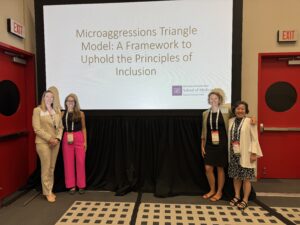
After so many years, Spadone has also cemented her interpersonal approach with patients. She brings compassion to these interactions and prioritizes her patients’ wishes. “It’s not about what I want. It’s about what the patient wants,” she said. “PAs can have significant impacts on patients when there is a trusting relationship that is fueled by a solid connection between PA and patient.”
Prioritizing HIV Education and Advocacy
Spadone became a faculty member with Pacific AETC in 2022 to help further the organization’s mission to expand the number of qualified healthcare professionals and organizations who provide HIV care in the Pacific region. Through this role, she provides HIV education to community members, medical institutions, and government agencies. For example, she travels to hospitals and the local public health department to provide education around topics like how to prevent perinatal transmission of HIV, and reasons to utilize pre-exposure prophylaxis, a preventive medication for people who are at a higher risk of contracting HIV from sex or injection drug use.
Spadone has also advocated for ways to address social determinants of health and their effect on the wellbeing of the HIV-positive community. At HOPES, she created a Medical-Legal Partnership program, which brings in legal expertise to address social needs that can affect patient care, such as lack of housing. “When patients are not able to access housing, they’re homeless and less likely to take their HIV meds,” she said. “The ultimate goal is to ensure that patients are able to take their meds so they will do well in their health.”
For her students and other PAs who have an interest in practicing HIV care, Spadone stresses the importance of approaching patients without judgment. “Just because somebody is homeless or using substances, that doesn’t define them,” she added. “That’s important information to keep in mind when we see patients.”
Jennifer Walker is a freelance writer in Baltimore, MD. Contact Jennifer at [email protected].
Related CME Opportunities
The Status of HIV in 2025 – Monograph
APAOG Podcast: HIV with Diane Bruessow
You Might Also Like
Advocating for Health Equity: PA Focuses Work on HIV and LGBT Health
How PAs Can Provide Compassionate Care to Survivors of Interpersonal Violence
PAs Take Pride in Improving Access to Care for LGBTQ Patients

Sponsored Content
October 21, 2026
You have 2 articles left this month. Create a free account to read more stories, or become a member for more access to exclusive benefits! Already have an account? Log in.