Sponsored Content
Colorectal Cancer Screening: Evidence-Based Resources, from Risk Assessment to Screening Completion
October 21, 2026
“We teach them the skills and now they have the capacity to render care when people show up on their doorstep.”
February 2, 2026
By Jennifer Walker
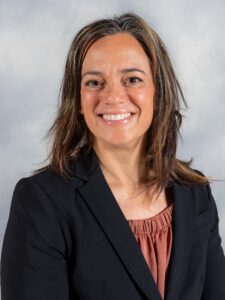
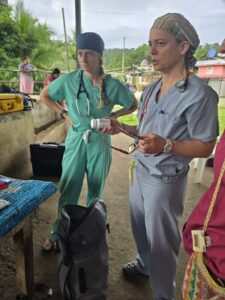
In July 2025, Bryn Kroto, DMSc, PA-C, took a group of providers on a humanitarian mission to the highlands of Guatemala. The curriculum and skills training for the trip was provided by Kroto’s company, Red Shot Medical, which has recruited healthcare professionals in the United States to work on projects with NGOs in other countries. On this trip, the team of about 12 providers partnered with Adonai International Ministries to work at Adonai Hospital, a small clinic where they led the “Top Five to Keep ‘Em Alive” pilot skills training. Kroto developed this training to cover five critical life-saving skills that can be used to stabilize patients for transport to the next level of care, which is about a two-hour trip by air and a six-hour trip by land for this particular community.
“If you have someone come to your facility in a remote setting who has been in a car accident or kicked by a cow or they fell out of a tree and they have trauma, these are some skills you can perform with minimal equipment to help them survive long enough to get to definitive care,” said Kroto, an assistant professor with the University of Lynchburg since October 2025. The skills taught during the training included how to stop bleeding with a tourniquet or pelvic binder, open airways with a nasal pharyngeal airway or an oral pharyngeal airway, perform effective CPR, and more.
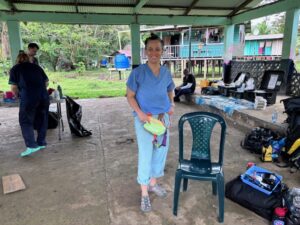
During her 27-year medical career, Kroto has focused on improving care in the U.S. and around the world. She started her medical career as an EMT and firefighter paramedic, then practiced in many specialties as a PA. At the University of Lynchburg, where Kroto completed a Doctor of Medical Science degree in emergency management and global health, her research focused on the importance of having clarity and continuity about the PA role across countries in order to make the biggest impact in emergency situations. Through Red Shot Medical and now the University of Lynchburg, she has also organized humanitarian missions to Panama, Tanzania, Uganda, and Guatemala, to provide medical care and offer critical training while keeping in mind the resources available to local communities.
“We wouldn’t teach remote providers how to intubate and bag a patient because they don’t have ventilators,” Kroto said. “But we can fortify them with tourniquets, needles, a bed sheet—very basic, easy things. In that way, we’re not creating a dependency between that rural, under resourced community and those of us who are back here in the United States. We’re uplifting them and empowering them in their own environment with items that can be easily accessible to them.”
Building a Career in Emergency Medicine and Global Health
Kroto became interested in medicine after her best friend died in a rock-climbing accident on Devil’s Tower, Wyoming, in 1996. “The recovery of his body was very technical and dangerous for the search and rescue folks,” she said. “It meant so much to me and his family that they took care of him even though he had passed, and it inspired me to become an EMT.” Kroto went on to become a firefighter paramedic, a position she held for a decade.
Since becoming a PA in 2010, Kroto has practiced in emergency medicine, family medicine, rural medicine, acute care, and orthopaedic surgery. In 2020, she was diagnosed with breast cancer and needed a more flexible schedule while she was in treatment. She transitioned to locum tenens work, taking on temporary roles at companies in Colorado, where she lives, as well as Arizona.
In 2024, Kroto founded Red Shot Medical to combine global health and PA advocacy with a faith-driven commitment to serve. In the beginning, the business focused on staffing for locums tenens positions. Then Kroto started developing humanitarian missions. However, organizing the missions on her own was challenging, as it required volunteer providers to pay their own way in order to participate.
Kroto found a way to continue this work under more stable conditions when she started her position at the University of Lynchburg. There, one of her main responsibilities is organizing missions throughout the year for students in the Doctor of Medical Science and the Executive Leadership programs.
“The point of the humanitarian missions is really about passing forward skills,” said Kroto. “We teach them the skills and now they have the capacity to render care when people show up on their doorstep. These missions also have an effect on us—we change as providers, too, so it goes both ways.”
Considerations During Humanitarian Missions
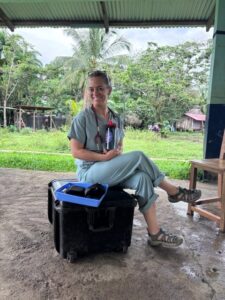
Through the University of Lynchburg, Kroto organizes several humanitarian missions a year and attends some of the trips herself. For these trips, a big part of Kroto’s job is selecting NGOs with whom to partner. “There are so many humanitarian efforts all over the world. It’s about supporting what’s already going on,” she said
On these missions, students primarily provide medical care to patients and train providers in the process, while the providers teach the students about local health and community issues. Historically, the biggest concerns have been treating diseases like hepatitis, HIV, malaria, and tuberculosis, all of which are still relevant today. “But now, the non-communicable diseases like hypertension, diabetes, cancer, alcoholism, heart disease, and heart attack have really come up rapidly and are overtaking these low- and middle-income country health needs,” she said. The students also perform outreach, education, and training about malaria prevention, malnutrition, maternal fetal medicine, and prenatal care.
Kroto—who will organize two missions to Panama and a mission to Uganda in 2026 and is also looking into trips to Angola, Costa Rica, and Honduras—also talks with students about how they can bridge the gap between the standard of care in the United States and the limited resources that are available in some countries. “The tendency is to say, ‘If we just give them the bare minimum, that’s good enough,’ Kroto said. “But the ethical way to think about it is to say regardless of where we are and who we’re dealing with, we’re still going to strive to get the standard of care to a certain person with everything we’ve got.”
Advocating for Common Language Around PAs
Through her doctoral work at the University of Lynchburg, Kroto has also become a global advocate for PAs. Her research showed that there are currently 20 different titles, including ‘clinical officers’ and ‘assistant medical officers,’ that are used to describe the PA role across 60 countries. “There’s no real title within the International Standard Classification of Occupations document at the World Health Assembly,” she said. “We need our own designated title recognition and scope of practice so we can be more easily deployed in the areas where we’re needed.”
Now, Kroto is involved in efforts to bring continuity to the profession on a global scale, including the LOOOP curriculum-mapping project that is being conducted by the International Academy of Physician Associate Educators. Through this large, multi-year project, researchers are mapping the training and curriculums that are used for the PA role in various countries. Kroto’s dream is to use this research to present to the World Health Organization as evidence of the need for a common title and scope of practice for PAs that can be used globally.
“From a leadership and clinical perspective, PAs are actually very skilled at being able to take a large-scale situation and bring order to it,” Kroto said. “The goal is to explain and educate clinicians and policymakers at the national level around the world about how having a common language for PAs would benefit their countries.”
Jennifer Walker is a freelance writer in Baltimore, MD. Contact Jennifer at [email protected].
You Might Also Like
Crossing Borders, Improving Care: Two PAs Who Left Their Mark Across the World
PA John Byrnes Uses His Skills as a PA to Provide Critical Resources, Care, and Training Internationally
Providing Medical Care in Liberia Inspires Chicago PA to Continue Global Healthcare Commitment
Sponsored Content
October 21, 2026