“One thing that our program proves is that PAs can be an anchor for specialty care outreach in a rural community and make it successful”
October 13, 2026
By Jennifer Walker
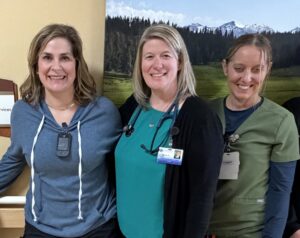
In 2024, physician associate Sarah Adsit provided care to the first group of patients at the Oncology Clinic and Infusion Center at Barrett Hospital & Healthcare, a small critical access hospital in Dillon, Montana. The opening of the new center — in collaboration with Bozeman Health Cancer Center in the city of Bozeman, Montana — marked the first time that local oncology services were available to residents of Dillon and surrounding communities.
One of these first patients, a woman in her mid-70s, was being treated for a recurrence of breast cancer. Fifteen years prior, the patient had driven two hours to Bozeman for chemotherapy, the closest place where she could get specialty care. Upon learning of the recurrence, the patient, who was struggling with daily pain, told her family that she would go to hospice instead of making the expensive and taxing commute again.
After meeting with Adsit, she agreed to treatment at the oncology center in Dillon. The patient — who recently passed away due to the disease’s progression — got an additional year and a half of life because cancer treatment was available close to her home.

“She had 18 months where we were able to get her pain free and not needing medicines, where she could do her home chores and spend time with her husband and her dog and her grandkids. It was beautiful for 18 months,” said Adsit, who is employed by Bozeman Health and contracted by Barrett Hospital & Healthcare.
In Montana, 19.2% of residents did not receive treatment after a cancer diagnosis and a great number of these people live in counties that are far away from cancer centers, according to research from Montana State University and the American Society of Clinical Oncology (ASCO). Chosen as a pilot site by the Alliance for Equity in Cancer Care in partnership with ASCO and Conquer Cancer, The ASCO Foundation, the Oncology Clinic and Infusion Center in Dillon is part of a five-year initiative to improve access to cancer care for rural Montana residents.
Since the center’s opening, patients in Dillon, as well as other towns in Montana’s rural Beaverhead County, are able to get the treatment they need and deserve without the financial burden and hardship of travel, giving them the opportunity to make more memories with their loved ones. “Time is the most important thing and we’re saving them from having to spend that time in a car or in a hotel,” said Adsit. “Instead, they’re able to spend that time at home with their families.”
Building an Oncology Center in Rural Montana
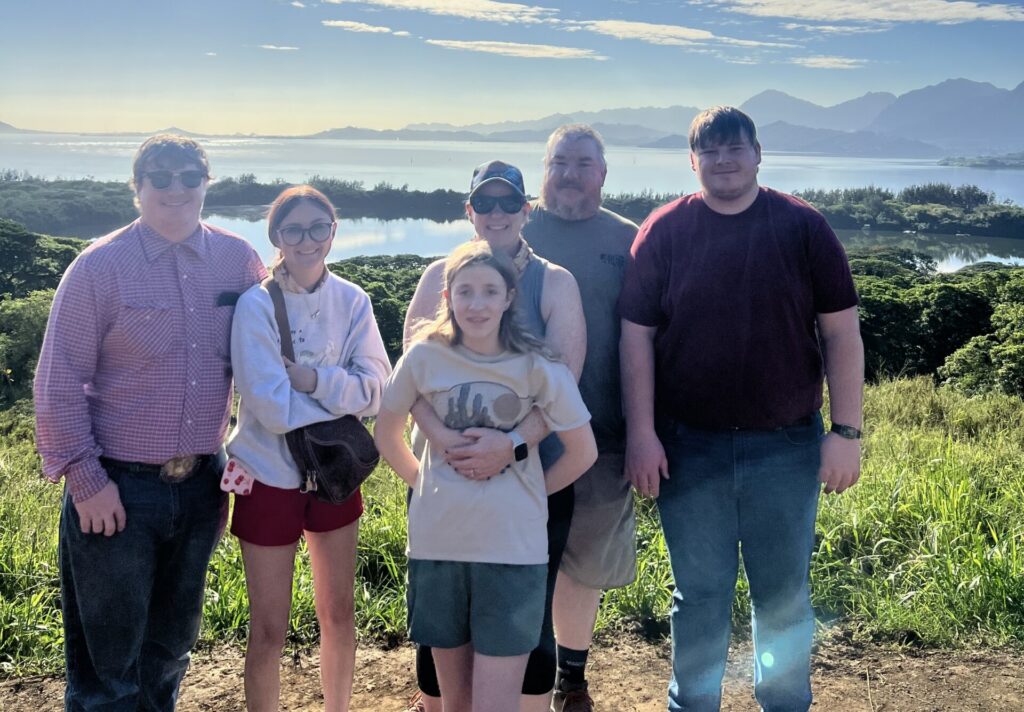
“I know firsthand the burden of traveling for cancer care,” said Adsit, whose daughter, Emmersyn, has a low-grade brain stem glioma, located in the lower back part of her brain near her spinal cord. For her treatment, Adsit, Emmersyn, and their family traveled monthly for chemotherapy for two years to Primary Children’s Hospital in Salt Lake City, Utah, about a five-hour drive from Dillon.
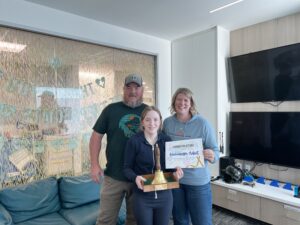
This is a big reason Adsit was drawn to practice at the Oncology Clinic and Infusion Center in Dillon. “When opportunities come up, you have to grab them,” said Adsit, who previously practiced in cardiology and nephrology for a combined 15 years. “I loved the idea of being a part of something so monumental and being able to build this blueprint that could help us get cancer care to this community in rural Montana and potentially spread the word to other rural communities.”
When building the cancer center, which was spearheaded by ASCO with funding from the Merck Foundation, Adsit and the team envisioned that she would run the center with one nurse, who would administer chemotherapy. Within six months, Adsit advocated for a second nurse after it became obvious that more than one provider was needed to help with infusions, navigation, and scheduling. Now the staff consists of Adsit, two nurses, and a medical assistant — with collaboration from Dr. William Conkright, a medical oncologist with Bozeman Health — who serve 145 patients and have provided care during more than 1,400 visits. As of April 2026, Montana State University estimated that the center has saved patients 214,800 miles of travel, which equates to over $50,000 in fuel cost saved.
“I’m most proud of being able to be that support for these patients so they no longer have to travel long distances for treatment,” Adsit said.
The Impact of Increased Access
Before the oncology center opened, residents of Dillon — population, 4,000 — had a few hurdles to face in accessing cancer treatment. In Montana, 76% of roads are unpaved and 290 mountain passes are affected by harsh weather, making it difficult to travel during certain times of year. The nearest regional cancer center, Bozeman Health Cancer Center, is 115 miles away over a mountain pass, which can be closed or difficult to pass in winter. The drive takes at least two hours and potentially five to six hours on bad roads in winter conditions. Then, once they arrive for treatment, patients typically sit for infusions that last from three to five hours and up to eight hours before driving home again or staying in a hotel. “It’s a burden on patients,” Adsit said.
With her clinic addressing these challenges, Adsit frequently sees its impact on her patients. She remembers a patient who had a recurrence of pancreatic cancer who had been traveling to Bozeman every two weeks for care, then every two days after each batch of treatment sessions to have her pump removed. Now the oncology center in Dillon is only a 35-minute drive away for her.
“It makes a huge difference, not only in her ability to continue to get treatment but also in how well she feels,” Adsit said. “She can have her family around her and that makes a big difference in how well she tolerates treatment.”
Going forward, Adsit would love to expand the cancer care model to other rural communities in Montana. She also hopes to serve more people at the cancer center in Dillon, such as those who are receiving an immunotherapy treatment that uses bispecific antibodies or lab-made proteins. This treatment increases the risk of developing cytokine release syndrome, similar to an inflammatory neuropathy, so it is administered at medical facilities that have access to a neurologist, Adsit said. However, the risk decreases as more medication is administered, meaning that patients could eventually be safely treated in Dillon for their follow-up care.
“A year ago, they just started to implement this treatment at Bozeman Health,” said Adsit. “It’s pretty remarkable that within a year we can potentially support these patients once the danger zone is gone.”
In oncology care and beyond, Adsit sees PAs as vital practitioners in bringing healthcare access to rural communities. “We need to provide patients with specialty care so that an 80-year-old isn’t having to drive two hours to get to oncology,” she said. “One thing that our program proves is that PAs can be an anchor for specialty care outreach in a rural community and make it successful.”
You Might Also Like
PA’s Relatability, Determination Help Expand Access to Care in Rural Tennessee
PA Susanna Storeng Pushes for Legislative Changes in Colorado to Improve Access to Care
Meet Two PAs Working to Provide Access to Maternal Mental Healthcare
You have 2 articles left this month. Create a free account to read more stories, or become a member for more access to exclusive benefits! Already have an account? Log in.