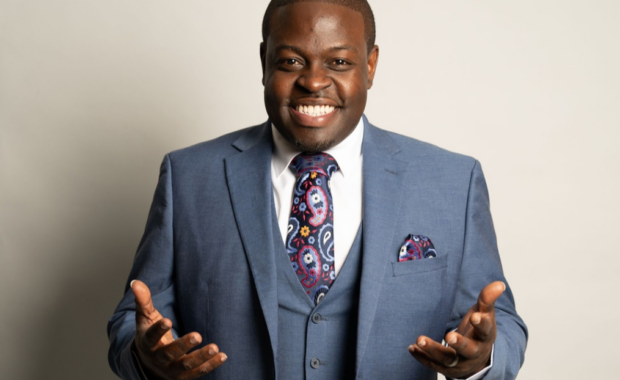
‘We are looking at a subset of the population that is ultimately losing the battle. This is a group of people we should help.’
November 17, 2026
By Jennifer Walker
After his first deployment to Iraq in 2006, Joshua Florez, a veteran of the U.S. Marine Corps and a physician associate in Fort Worth, Texas, experienced the debilitating symptoms of post-traumatic stress disorder (PTSD). “It definitely was not something that people wanted to admit they were struggling with. You didn’t want to be labeled in the military as somebody who was weak-minded,” said Florez. After leaving the Marines in 2009, he continued to have nightmares about his time overseas, had intrusive thoughts, and felt unsafe in public spaces.
Florez first sought care from the Veterans Health Administration, but there were long wait times between visits and last-minute appointment cancelations — significant roadblocks when he was struggling and desperately needed help. Ultimately, he found psychiatric treatment and counseling elsewhere, though the care was fragmented. “A lot of it did feel like you were stumbling around in the dark and trying to figure things out for yourself,” he said. “Had it not been for the support of my family, especially my brother, I don’t think my story would have been a successful one.”
Years later, after becoming a PA in 2017, Florez had several veteran patients who had the same difficulties accessing care. “They were desperate for quality resources. That is what started the gears turning in my head,” he said.
This led Florez to start Operation Ten Ten (OTT), a nonprofit that connects veterans who have been diagnosed with PTSD with psychiatric care, evidence-based counseling, peer support, spiritual counseling if appropriate, and adjunctive mental health care that addresses barriers that might hinder their success. The one-year program — which is based in Texas, home to more veterans than any other state — seeks to address the high rate of suicide among veterans. Nationwide, nearly 160,000 veterans died by suicide between 2001 and 2024.
“With Operation Ten Ten, we’re addressing a subset of the veteran population that is ultimately losing the battle. This is a group of people we should help,” said Florez, who currently works as a traveling PA in cardiac surgery. “We don’t want somebody to die from suicide — that’s as black and white as we can make it. We want veterans to find the healing they need and the skills they need to move forward with their lives.”
Embracing the Full Spectrum of Care
After September 11, 2001, Florez felt a duty to enlist in the U.S. military and joined the U.S. Marine Corps in 2004. As an Arabic linguist and a signals intelligence operator, he was deployed with 1st Radio Battalion during Operation Iraqi Freedom and the 13th Marine Expeditionary Unit during Operation Enduring Freedom in Afghanistan, among other missions.
After leaving the military and getting his bachelor’s degree in biology, Florez, who had wanted to attend medical school, met a PA and decided to shift his plans: He went on to get his master’s degree in medical sciences and then his PA degree.
Florez now practices in cardiac surgery, where he enjoys working with patients through the full spectrum of care, from the operating room and the ICU to the outpatient clinic. “That idea of continuity is a big component of what we’re trying to do at Operation Ten Ten,” he said.
Coordinating Care for Veterans with PTSD
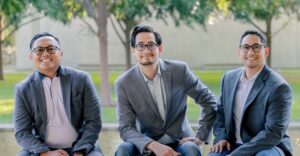
In 2024, Florez founded OTT with his partners: John Heddins, who is also Florez’s brother, and Ian Pagdilao. The team first spent a year researching PTSD and the most successful treatment options, which helped build the foundation of the nonprofit’s program. For example, Florez learned that he wanted to connect veterans with a modality of counseling that is evidence-based — an aspect of treatment that was particularly important to him as a PA.
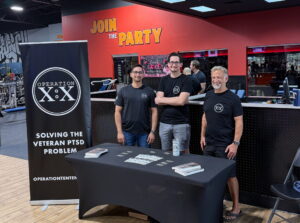 Then, in 2025, OTT’s program officially launched with the goal of creating a roadmap for veterans to get treatment and support for PTSD. To do this, OTT has partnered with a network of over 20 clinicians and veterans who provide psychiatric care, counseling, and peer support. Florez, Heddins, and Pagdilao collaborate with these clinicians and volunteers by providing the treatment framework, scheduling appointments, and addressing any issues that may arise. Every three months, OTT and each veteran’s entire care team meet to discuss individualized treatment plans and adjust as needed.
“We operate like care coordinators: We’re the liaisons between the veterans and their treatment team,” said Florez, who has learned the value of team-based care in improving patient care and outcomes through his work as a PA. “We want our veterans to be able to fully invest into the healing and the restoration they can find by accessing high-quality resources and treatment.”
In May 2026, OTT wrapped up its pilot year with a graduation ceremony for its first cohort of veterans. Their goals for the group had been a 50% reduction in PTSD symptoms and a less than 10% dropout rate, both of which they exceeded: All enrolled veterans completed the program and saw a 70% reduction in PTSD symptoms. At the ceremony, the wife of one of the veterans approached Florez and said, “I feel like I’ve got my husband back. I haven’t seen him this way in over 10 years.”
Florez and the team are actively recruiting new veterans to join the program. Going forward, they hope to accept veterans on a rolling basis and connect them with treatment within two weeks. Florez’s long-term vision is to continue building a program that provides effective PTSD treatment in an urban center with a large population of veterans, one that could be an example for other cities.
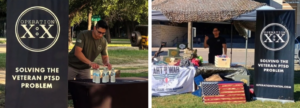
“I would really like for OTT to be a model of what PTSD treatment can be,” he said. “What can we actually accomplish when we make the veteran the focus of what we’re doing, when we wrap services around them and support their families and we really partner with them and journey together? That’s the question and the reason that we’re doing the work that we do.”
If you or someone you know is experiencing a mental health crisis or suicidal thoughts, call or text 988 to reach the 988 Suicide & Crisis Lifeline.
Jennifer Walker is a freelance writer in Baltimore, MD. Contact Jennifer at [email protected].
You Might Also Like
PA Christopher Dietrich Strives to Ensure Veterans Have Access to Behavioral Healthcare
Rural Medicine a Smooth Transition for Army PA
PA and Veteran Austin Shinaberry is Passionate About Helping Other Veterans Access Their Healthcare Benefits
Sponsored Content
October 30, 2026
You have 2 articles left this month. Create a free account to read more stories, or become a member for more access to exclusive benefits! Already have an account? Log in.