Explore PA Practice Laws with AAPA’s New Interactive Maps
Map tools provide instant summaries of key criteria across the full United States, regions, or states
August 25, 2026
With 30+ state legislative wins so far this year and more changes on the horizon, the PA practice and regulatory environment has advanced far from where it was 20 – or even 10 – years ago.
But because PA practice laws are established at the state level, understanding the national landscape has historically required reviewing laws and regulations one jurisdiction at a time.
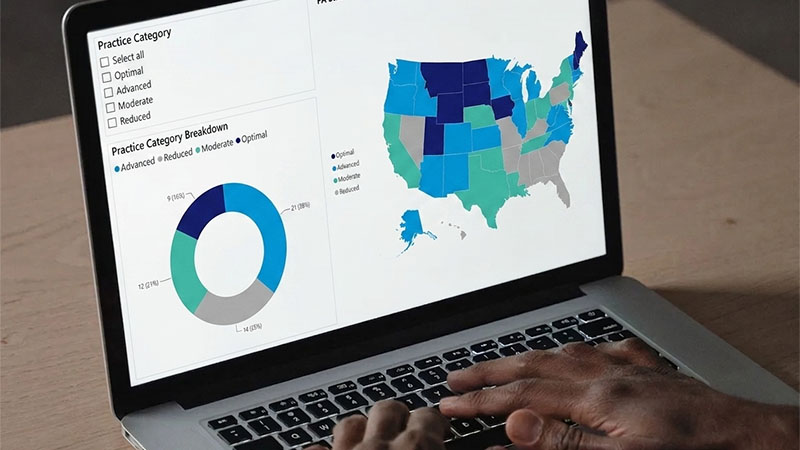
To make researching the status of PA practice modernizations across states and U.S. territories more efficient for PAs and all stakeholders, AAPA has developed a series of interactive PA practice maps that are now available on AAPA.org: State Practice Maps.
The maps turn complex legislative and regulatory information into an easy-to-use resource. Users can quickly examine an individual state or U.S territory, compare multiple jurisdictions, and identify regional and national trends in a single view.
[Register for LAS by September 10!]
AAPA uses a four-tier framework (Optimal, Advanced, Moderate, and Reduced) to classify and compare the PA practice environment in each state and U.S. territory. These classifications reflect the extent to which a jurisdiction’s laws and regulations align with AAPA’s key Modernization Criteria. The more elements of practice modernization a jurisdiction adopts, the closer that jurisdiction is to being classified as an optimal practice environment. This classification aims to provide a consistent way to assess progress, identify remaining barriers, and compare PA practice environments across the country.
The criteria include:
- Adaptable proximity requirements
- Collaboration
- Eliminated the requirement for a specific relationship between a PA and a physician or any other healthcare provider
- No chart signature mandates
- No physician-PA ratio
- PA board
- PA(s) on a medical board, osteopathic board, or healing arts board
- Scope determined at the practice level
- State allows direct payment to PAs
Within certain maps, users can choose which criteria to display and instantly see how those polices are distribute across the country, regions, or among selected states as needed.
The maps will be updated as legislative and regulatory changes are enacted and adopted. AAPA encourages PAs to reach out with any questions or suggestions as we continue to work to ensure it equips PAs with information they need. Please contact [email protected] with questions or comments.
You might also like